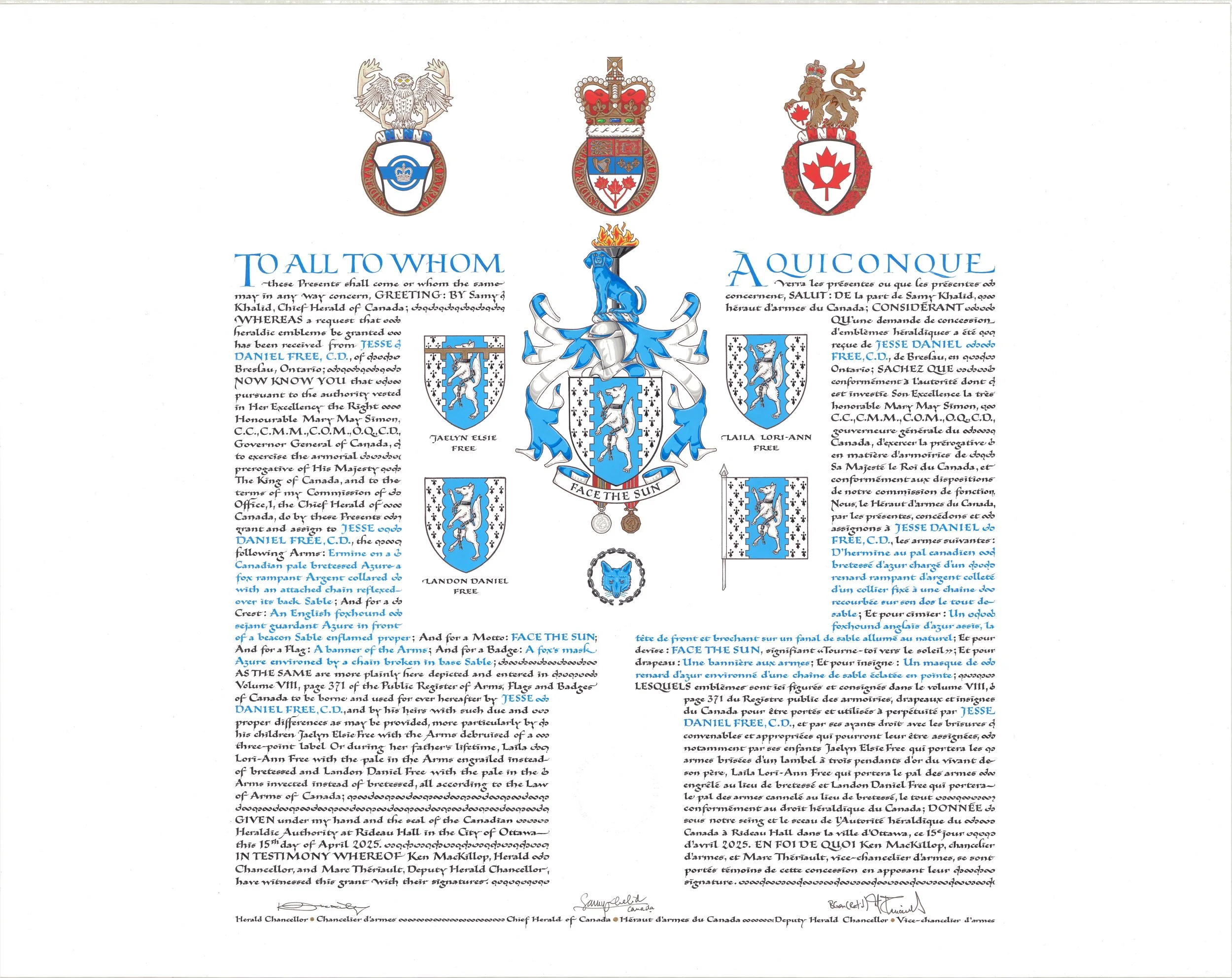
A Grant of Arms, Earned in Service
Registered with the Canadian Heraldic Authority — Public Register of Arms, Flags and Badges of Canada, Volume VIII, Page 371, 15 April 2025.
What is a Coat of Arms?
A coat of arms is a unique heraldic design formally granted to an individual, family, or organisation — originating in medieval Europe as a means of identification on the battlefield and in legal documents. Each element of the design carries specific meaning, governed by a precise visual language called heraldry that has been maintained continuously for over eight centuries.
In Canada, the granting of heraldic bearings remains an active and living tradition administered by the Canadian Heraldic Authority on behalf of the Crown. A grant of arms is not purchased or inherited by default — it is formally assigned to a specific person based on their character, service, and standing. The arms, once registered in the Public Register of Arms, Flags and Badges of Canada, belong to that person in perpetuity and may be passed to their descendants with appropriate differences.
Today, personal arms serve as a mark of identity and integrity — a formal, Crown-recognised symbol of who someone is and what they stand for. For a consulting firm built on accountability, service, and operational credibility, there is no more fitting emblem.
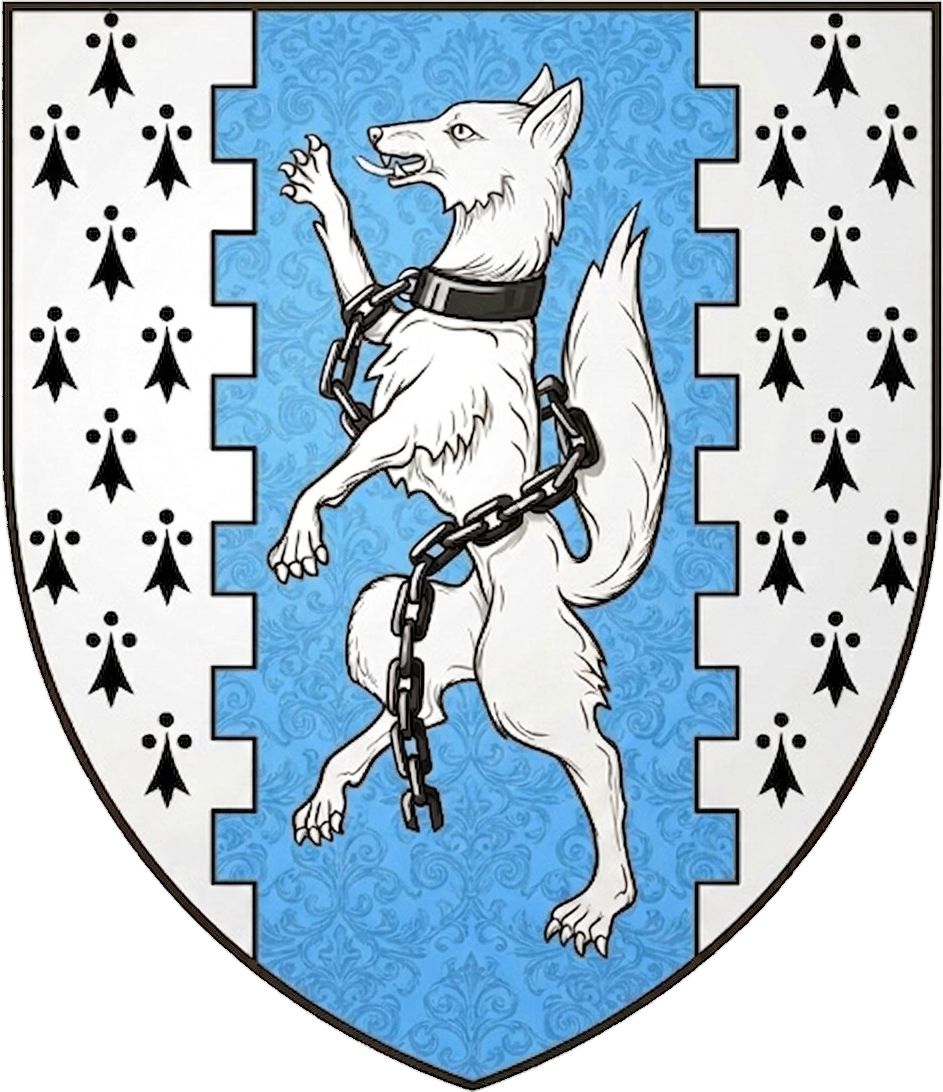
“Ermine on a Canadian Pale Bretessed Azure a Fox Rampant Argent Collared with an Attached Chain Reflexed over its Back Sable.”
THE ARMS
The shield is ermine — white, scattered with black spots — evoking the image of an arctic fox: white fur, black nose, black eyes. Set against it runs a vertical band of light blue, the colour of the Royal Canadian Air Force, where I served. Its edges are bretessed — cut into the castle battlements that also nod to a lifelong hobby of mine as a Lego collector.
Upon the pale stands a fox rampant, argent — rearing, alert, in motion. Around its neck, a collar and chain, thrown back over its shoulder. The chain represents freedom. It is also a quiet pun on my surname.
THE CREST
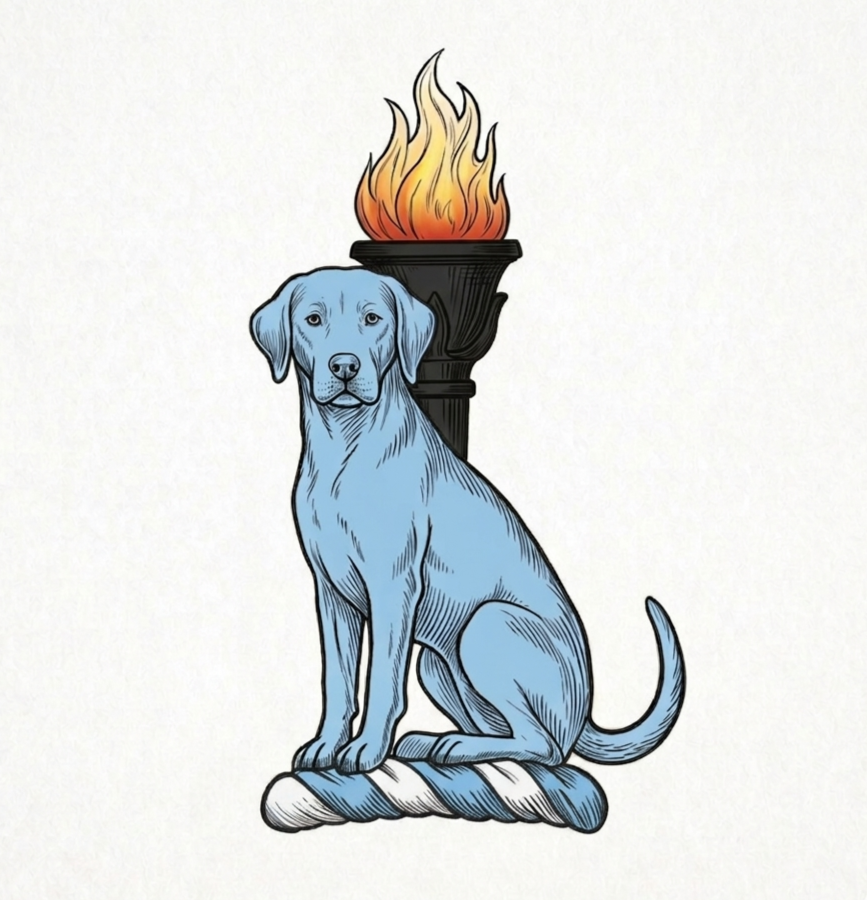
“An English foxhound Azure sejant guardant in front of a beacon Sable enflamed proper.”
Above the shield sits an English foxhound, rendered in the same azure as the arms below. Paired with the fox on the shield, the two animals echo an old, unlikely friendship — the kind made famous in The Fox and the Hound. It is meant to suggest that the most important partnerships are rarely the obvious ones.
Before the foxhound stands a lit beacon — a torch — representing inspiration inherent in leadership. The torch is the oldest symbol of the educator: knowledge carried forward, shared, and kept alight.
MOTTO
“FACE THE SUN”
A phrase is used by my family as encouragement to overcome adversity and keep looking forward. This is drawn from the Walt Whitman quote: "Keep your face always toward the sunshine, and shadows will fall behind you."
PROVENANCE
Why a Consulting Firm Has a Coat of Arms
The honest answer is that the arms belong to me, not to the firm — and that is the point. Fox Niner Group is not a faceless entity. It is the professional practice of one person, whose record of service, integrity, and community commitment has been formally recognised by the Crown and entered into Canada's public heraldic register.
When you work with Fox Niner Group, you work with someone who has earned the right to carry these symbols — and who brings that same standard of accountability and service to every engagement.
Original concept: Darrel Kennedy, Assiniboine Herald · Painter: D. Robert Tunstall · Calligrapher: Luc Saucier · Registered: Public Register of Arms, Flags and Badges of Canada, Volume VIII, Page 371, 15 April 2025